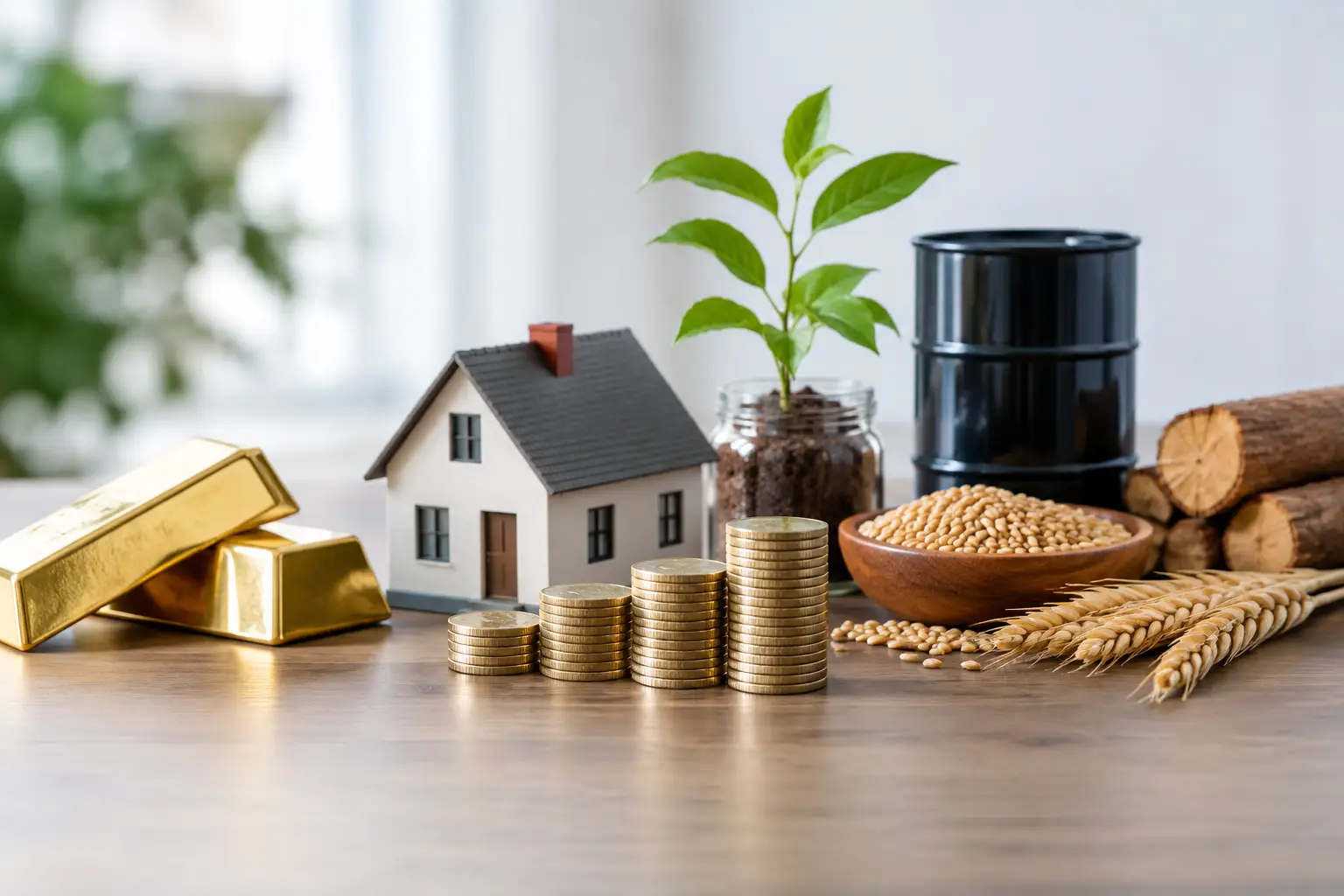

WHY PROTECTING PURCHASING POWER IS THE FOUNDATION OF REAL WEALTH
Wealth is not measured simply by the amount of money accumulated in a bank account. It is measured by what that money can purchase, the opportunities it can create, and the financial independence it can sustain over time. Inflation challenges this foundation by gradually increasing the prices of goods and services, making yesterday’s savings less powerful in tomorrow’s economy. A person who carefully accumulates a substantial cash reserve may feel financially secure, yet discover years later that housing, insurance, transportation, food, and essential services have become significantly more expensive. The balance may remain unchanged while its purchasing power declines. This is why successful long-term wealth building requires more than earning, saving, and avoiding unnecessary spending. It requires understanding which assets have the potential to preserve or increase their economic value as prices change. Inflation-resistant investing does not mean finding investments that never lose money. Every asset carries risks, and some investments commonly described as inflation hedges can perform poorly during periods of rising prices. The more useful objective is to own a thoughtful collection of productive, income-generating, and financially resilient assets that can adapt to changing economic conditions. Seven important categories deserve consideration: businesses with pricing power, real estate, inflation-linked government bonds, precious metals, infrastructure, agricultural assets, and diversified ownership of global enterprises. Each responds differently to inflation, interest rates, economic growth, and investor expectations. For example, an established company that can increase its selling prices without losing customers may protect profitability more effectively than a business competing solely on low prices. A well-managed rental property may eventually generate higher income as market rents adjust, although financing costs, maintenance, and local regulations can limit the benefit. Inflation-linked bonds may offer a more direct connection to changes in consumer prices, while gold may serve as a defensive asset during particular periods of monetary uncertainty. The strongest strategy is therefore not to predict which investment will dominate the next economic cycle. It is to build a financial structure capable of surviving different environments. Investors who understand this distinction stop treating inflation as merely an unpleasant increase in living expenses and begin recognizing it as a serious consideration in every decision involving capital, debt, savings, and long-term ownership.

PRODUCTIVE BUSINESSES AND REAL ESTATE CAN TURN ECONOMIC CHANGE INTO OPPORTUNITY
Two of the most recognizable wealth-building assets are ownership in productive businesses and investment in real estate. Their appeal comes from a fundamental economic principle: assets capable of producing goods, providing valuable services, or generating income may be able to adjust to changing price levels over time. Consider a successful consumer-products company with a trusted brand, efficient operations, and loyal customers. When the costs of transportation, labour, and raw materials rise, the company may be able to adjust its prices while maintaining demand. If management controls expenses and protects customer relationships, revenue and earnings may eventually grow alongside the broader economy. Shareholders participate in that potential through business ownership, whether they purchase individual stocks or diversified investment funds. However, pricing power is not automatic. A company facing intense competition, excessive debt, or declining customer demand may struggle even when inflation pushes its selling prices higher. Investors should therefore evaluate competitive advantages, financial strength, cash generation, management discipline, and the price paid for ownership rather than assuming every stock provides inflation protection. Real estate offers a different form of economic exposure because buildings and land satisfy persistent human and commercial needs. Residential housing, industrial warehouses, carefully located retail properties, and certain commercial facilities can generate rental income while retaining underlying usefulness. Imagine an investor purchasing a modest rental property in a neighbourhood supported by employment, transportation, and population growth. Over many years, responsible maintenance, reasonable financing, and disciplined tenant management may create opportunities for rental income and property value to increase. Yet ownership also brings property taxes, insurance premiums, repairs, vacancies, legal responsibilities, and potentially substantial borrowing costs. Rising interest rates can reduce affordability and property valuations even while consumer prices remain elevated. This is why experienced investors examine the income a property can realistically produce after expenses, rather than relying exclusively on predictions of appreciation. For individuals who do not want the responsibilities of direct property ownership, publicly traded real estate investment trusts may provide access to diversified property portfolios, although their market prices can fluctuate sharply. The most important lesson is that neither stocks nor property should be purchased merely because inflation exists. Their long-term investment merit depends on the quality of the underlying assets, the sustainability of their earnings, the financing arrangements, and the valuation at which they are acquired. Productive ownership becomes particularly powerful when investors combine patience with sound analysis and avoid paying excessive prices for otherwise attractive opportunities.

INFLATION-LINKED BONDS, PRECIOUS METALS, AND INFRASTRUCTURE OFFER DIFFERENT FORMS OF DEFENCE
Not every investment designed to withstand inflation needs to depend on rapid business growth or rising property values. Some assets are valuable precisely because they respond differently to economic pressures. Inflation-linked government bonds are an important example. In the United States, Treasury Inflation-Protected Securities, commonly called TIPS, adjust their principal according to changes in a specified consumer price index. This mechanism can help investors preserve purchasing power when the bonds are held under suitable conditions, although their market values can decline before maturity when real interest rates rise. Investors must also consider taxation, maturity dates, currency exposure, and the difference between measured inflation and their personal cost of living. Canadian investors should recognize that investment products and government bond availability differ by jurisdiction, making it essential to review the actual terms of any security before purchasing it. Precious metals provide another potential defence, but through a completely different mechanism. Gold has a long history as a store of value and a globally recognized monetary asset. It does not produce rental income, corporate earnings, or contractual interest payments. Instead, its market value is influenced by investor confidence, real interest rates, currency movements, central-bank activity, and demand for financial protection. Gold may perform well during certain inflationary or uncertain periods, but it can also experience prolonged declines and does not reliably match inflation from year to year. Physical ownership introduces storage, insurance, and transaction costs, while exchange-traded products introduce their own structures and fees. Infrastructure investments occupy a third category. Roads, utilities, energy networks, transportation facilities, communications systems, and renewable-power installations provide services that modern economies continuously require. Some infrastructure businesses operate under long-term contracts or regulatory arrangements that permit revenues to adjust with inflation. For instance, a utility or transportation operator may have contractual pricing provisions that support income stability when operating expenses increase. However, regulatory restrictions, political decisions, construction costs, interest rates, and financing requirements can materially affect results. An infrastructure project that appears essential to society is not necessarily an attractive investment at any price. The common advantage of these three asset categories is not that they eliminate inflation risk. It is that they introduce economic characteristics distinct from ordinary cash savings or conventional business ownership. An investor holding carefully selected inflation-linked securities, a measured allocation to precious metals, and exposure to financially sound infrastructure may create a portfolio with more ways to respond to changing conditions. The appropriate allocation depends on investment objectives, liquidity requirements, time horizon, and tolerance for temporary losses. Financial resilience emerges from understanding the purpose of each asset rather than collecting investments simply because they carry a reassuring label.

AGRICULTURAL ASSETS AND ESSENTIAL RESOURCES CONNECT WEALTH TO REAL ECONOMIC DEMAND
Some of the world’s most economically important assets are connected to necessities that people continue purchasing regardless of financial market sentiment. Agricultural land, food production, energy resources, and essential raw materials belong to this broad category. Their investment appeal arises from the relationship between physical supply, consumer demand, production costs, and the availability of productive resources. Farmland is particularly interesting because it combines ownership of a finite physical resource with the potential to generate income through agricultural production or leasing arrangements. Well-located land with productive soil, reliable water access, efficient transportation connections, and appropriate agricultural infrastructure may remain economically valuable over long periods. In some circumstances, rising food prices can support agricultural revenues and land values. Nevertheless, farming is exposed to weather, crop disease, commodity-price volatility, equipment expenses, labour shortages, environmental restrictions, and changing trade policies. An increase in food prices does not guarantee that a farm owner’s profit will increase, especially when fertilizer, fuel, financing, and transportation become more expensive simultaneously. Imagine two agricultural operations producing similar crops. One has manageable debt, efficient irrigation, productive soil, and dependable access to buyers. The other depends on expensive borrowing, outdated equipment, and uncertain water supplies. Even during a period of rising crop prices, their financial outcomes may differ dramatically. This illustrates why the quality of an asset and the discipline of its management matter more than the broad economic category to which it belongs. Commodity investments also require careful distinction. Purchasing shares in a profitable agricultural business is different from buying farmland directly, and both differ from holding a commodity futures fund. Futures-based investments can be affected by contract rollover costs, market structure, and price volatility, producing returns that differ substantially from changes in the price of the underlying commodity. Energy producers and resource companies may benefit when selling prices rise, but their earnings remain sensitive to operating costs, capital spending, government policy, and global demand. Investors seeking exposure to essential resources should therefore investigate the investment vehicle, not merely the economic story. For most individuals, direct ownership of farmland or resource projects may be impractical because of high capital requirements and specialized expertise. Diversified publicly traded businesses or appropriately structured funds may provide more accessible alternatives, although they introduce stock-market risks and management expenses. The larger principle is that economic necessity can support long-term demand, but necessity alone does not guarantee profitability. Sustainable wealth comes from owning resources or enterprises that can convert demand into durable financial results while managing costs, debt, and operational uncertainty.

BUILDING A DIVERSIFIED PORTFOLIO THAT PROTECTS WEALTH WITHOUT SACRIFICING OPPORTUNITY
The most sophisticated response to inflation is rarely a dramatic decision to move all available money into a single asset. It is a disciplined investment process that recognizes uncertainty and prepares for multiple possible economic outcomes. Inflation may accelerate, stabilize, or decline. Interest rates may rise or fall. Business earnings can improve while property prices weaken, and gold may increase in value while other defensive assets struggle. Because these relationships change, diversification is an essential part of long-term financial planning. A diversified portfolio can combine broad ownership of productive businesses, carefully evaluated real estate exposure, high-quality fixed-income investments, and selected allocations to assets with different inflation sensitivities. The objective is not to own every available investment. It is to ensure that financial security does not depend entirely on one company, one property, one industry, or one economic prediction. Consider an individual who has built a substantial investment portfolio while also maintaining an emergency reserve. Rather than investing every available dollar in property because housing prices have historically increased, that person might hold diversified equity investments for long-term growth, suitable bonds for stability and future spending needs, and limited exposure to other assets where there is a clear investment rationale. Such an approach creates flexibility. If an unexpected expense arises, the investor may avoid selling an illiquid property at an unfavourable time. If financial markets decline, available reserves can reduce pressure to liquidate long-term investments. If inflation remains elevated, ownership of productive businesses and selected inflation-sensitive assets may provide opportunities for adjustment. Portfolio construction should also account for debt. Borrowing can magnify gains when asset values and income rise, but it can magnify losses when financing becomes expensive or cash flow weakens. Investors should evaluate how much debt they can responsibly service under less favourable conditions, not merely under today’s assumptions. Tax treatment also matters. Registered investment accounts, retirement arrangements, capital-gains rules, and income taxation vary across countries and can meaningfully affect after-tax outcomes. Canadians may consider the roles of accounts such as TFSAs and RRSPs where eligible, while investors in other jurisdictions should evaluate their applicable tax-advantaged arrangements. Periodic rebalancing helps maintain an intended investment strategy when market movements cause certain holdings to become disproportionately large. Perhaps most importantly, successful investing requires distinguishing between protecting purchasing power and chasing high returns. An investment that promises spectacular gains but carries excessive risk may undermine the very financial security it is supposed to create. A more durable approach begins with clear goals, realistic expectations, manageable costs, adequate liquidity, and consistent ownership of fundamentally sound assets. Inflation is a challenge that cannot be eliminated through clever investment selection, but its long-term impact can be addressed through thoughtful decisions. The real advantage belongs to investors who build financial strength before they urgently need it, remain patient during market uncertainty, and measure progress by the freedom and purchasing power their wealth can sustain.
CONCLUSION
Inflation can quietly diminish the value of money, but disciplined ownership of productive and resilient assets can help defend long-term purchasing power. Real wealth is not simply accumulated. It is protected, strengthened, and positioned to create opportunities across changing economic conditions.
YOUR TURN
If inflation continued reshaping the economy for the next decade, would your current investments preserve your financial freedom or leave your future increasingly vulnerable? Which inflation-resistant asset would you trust most to help build lasting wealth, and why? LIKE AND COMMENT below to share your perspective and join the conversation about building a stronger financial future.
DISCLAIMER: This article is provided for general educational and informational purposes only and does not constitute personalized financial, investment, legal, or tax advice. All investments involve risk, including potential loss of principal. Past performance does not guarantee future results. Investment products, tax rules, and regulations differ by jurisdiction. Consider consulting an appropriately qualified financial or tax professional before making significant investment decisions.


Leave a Reply