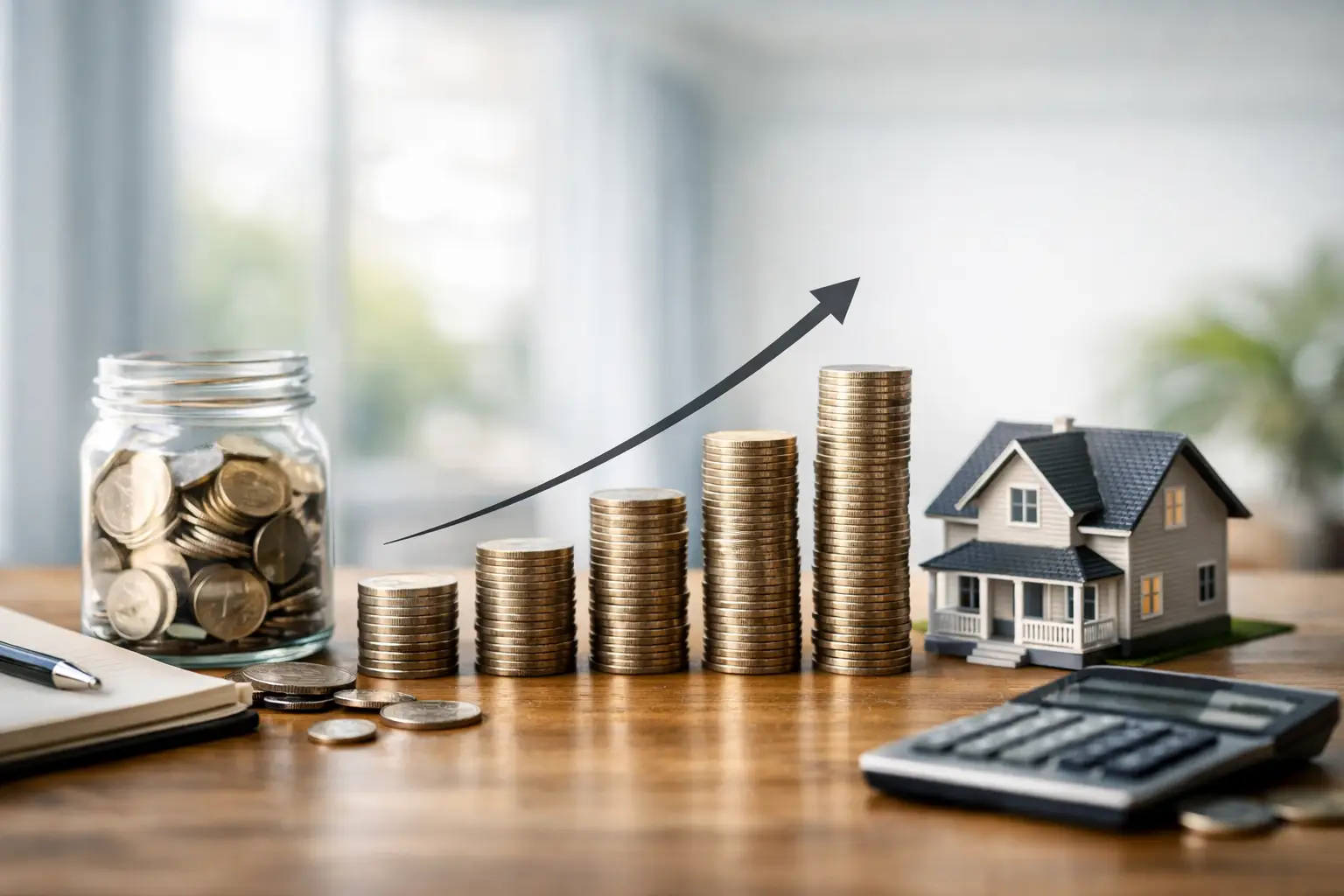
Your wealth plan is not defined by your salary alone. It is defined by the gap between what you earn and what you keep available to invest. If you are asking what savings rate builds wealth, the honest answer is not one magic percentage. It is a rate high enough to fund your future goals, low enough to sustain for years, and paired with an active plan to grow income.
A person earning $60,000 who invests 30% can build more long-term freedom than someone earning $150,000 who spends nearly all of it. That is the power of a savings rate: it turns income into ownership. Every dollar you save can become an investment in shares, real estate, a business, cash-flowing digital assets, or the financial runway that lets you pursue a better opportunity.
What Savings Rate Builds Wealth for Most People?
For many working adults, a savings rate of 15% to 20% of gross income is a solid starting benchmark for retirement and long-term investing. It is better than waiting for the “perfect” moment, and it can produce meaningful results when maintained over decades.
But building wealth faster usually calls for more. A savings rate of 25% to 35% creates stronger momentum, particularly for professionals who want flexibility before traditional retirement age. At 40% or more, financial independence can become a realistic medium-term target, provided your lifestyle remains stable and you invest consistently.
These ranges are not a contest. A parent managing childcare costs, a graduate paying down high-interest debt, and an entrepreneur reinvesting in a new company should not force themselves into the same number. The right rate is one you can repeat through ordinary months, not only during a burst of motivation.
Here is a practical way to think about the levels:
- 10% or less builds the habit, but progress may be slow unless income is very high.
- 15% to 20% is a strong foundation for traditional retirement planning.
- 25% to 35% accelerates investing and creates greater career flexibility.
- 40% to 50% or more can shorten the path to financial independence dramatically, but often requires high income, lower fixed costs, or both.
Your savings rate is not a measure of your worth. It is a lever. Pull it higher as your skills, income, and options expand.
Calculate Your Real Savings Rate
The formula is simple:
Savings rate = Money saved and invested ÷ Gross income × 100
If you earn $80,000 per year before taxes and put $16,000 toward investing, debt reduction above required payments, and cash reserves, your savings rate is 20%.
There is one useful distinction. For a broad wealth-building calculation, include money that improves your net worth: retirement contributions, brokerage investments, business capital, real estate down payments, and extra payments on high-interest debt. Keep emergency savings separate in your tracking if you want clarity, but recognize that cash reserves protect you from borrowing or selling investments at the worst time.
Do not count money you intend to spend soon on vacations, holiday shopping, or a new car. Saving is not merely delaying consumption for the next purchase. Wealth-building savings create assets, reduce expensive liabilities, or protect your future choices.
Use Take-Home Pay for Monthly Decisions
Gross income gives you a clean long-term benchmark, especially when comparing your rate across years. Yet monthly budgeting is easier with take-home pay.
For example, if your after-tax income is $5,000 a month and you invest $1,250, you are directing 25% of your spendable income toward wealth. That number can feel more immediate than a percentage of salary. Track both if possible: gross savings rate for the big picture, take-home savings rate for household decisions.
The Wealth Equation Is Bigger Than Saving
A high savings rate is powerful, but it is only one side of the equation. Wealth grows through the relationship between income, savings, investment returns, and time.
A simple framework is:
Future wealth = Regular investments + investment growth + additional income invested
Suppose you invest $1,000 per month for 25 years and earn an average annual return of 7%, before taxes and fees. You could build roughly $810,000. Raise that contribution to $1,500 per month, and the projected value becomes roughly $1.2 million. Returns will never arrive in a straight line, and no rate is guaranteed, but the lesson is clear: contribution size matters enormously.
This is why income growth deserves as much attention as expense control. Cutting $100 from your monthly spending is valuable. Learning a skill that produces an extra $1,000 per month, then investing a meaningful portion of it, can change the entire timeline.
The goal is not to live small forever. The goal is to create an abundant source of income while keeping lifestyle inflation from consuming every raise, bonus, client payment, or business profit.
Match Your Rate to Your Financial Independence Goal
The traditional 15% guideline may suit someone happy to work until their 60s and receiving an employer match. It may not suit someone who wants the option to leave full-time employment in 15 or 20 years.
One popular financial independence benchmark estimates annual spending needs at roughly 25 times your yearly expenses. This comes from the commonly discussed 4% withdrawal guideline. It is a planning estimate, not a promise. Taxes, market declines, inflation, healthcare costs, and the timing of retirement can all alter the number.
Still, it provides a useful target. If you expect to need $48,000 per year from investments, a rough portfolio target is $1.2 million:
$48,000 × 25 = $1,200,000
Now your savings rate becomes strategic rather than abstract. You can estimate how much you need to invest each year, review your expected return assumptions, and decide whether raising income or reducing expenses will move the needle faster.
For readers pursuing entrepreneurship, the target may look different. You may want 12 months of personal expenses in cash before leaving a job, plus startup capital and diversified investments outside your business. Financial freedom is stronger when it does not rely on one employer, one client, or one risky venture.
Raise Your Savings Rate Without Building a Miserable Life
The fastest sustainable improvements usually come from the biggest categories: housing, transportation, food, taxes, and debt. But there is a difference between purposeful spending and deprivation. Cutting a small pleasure you value may save little. Renegotiating an expensive recurring bill or avoiding a car payment that strains your budget can save thousands.
Start by automating a percentage of every paycheck into investments and reserves. If 10% is realistic now, begin there. Increase the transfer by 1% after a raise, debt payoff, or new revenue milestone. Small planned increases remove the pressure of making one dramatic change.
Then give every income increase a job. A useful split for a raise or side-hustle profit is 50% to investing, 30% to taxes or business reserves when needed, and 20% to improving your life. Adjust the percentages for your circumstances, but keep a rule in place. Without one, higher earnings often disappear into a more expensive lifestyle.
Look beyond your primary job as well. A freelance service, local enterprise, digital product, rental strategy, or dividend-focused investment portfolio can create additional income streams. Not every opportunity is right for every person, and no investment should be rushed. Research the costs, risks, tax treatment, demand, and time commitment before committing capital. The aim is resilience, not random hustle.
When a Lower Rate Is the Smart Move
There are seasons when forcing a high savings rate does more harm than good. If you carry credit-card debt at 20% interest, paying it down may be your highest-return move. If you have no emergency reserve, building one can prevent a future financial setback. If your employer offers a retirement match, contribute enough to capture it before directing money toward lower-priority goals.
A lower rate can also be sensible while you invest in a credential, relocate for a stronger career path, or fund a carefully tested business. The key is intentionality. Know why your rate is temporarily lower, set a review date, and have a measurable plan to raise it again.
Frequently Asked Questions
What savings rate is considered good for building wealth?
A savings rate of 15% to 20% of your gross income is a strong baseline for long-term wealth building, especially for traditional retirement timelines. If you want more flexibility or an earlier work-optional life, many people aim for 25% to 35% or more as their income grows. The best rate is one you can sustain through real life, not just in a perfect month. Focus on gradually increasing your rate over time rather than hitting a single “perfect” number right away.
Should I calculate my savings rate based on gross or take-home pay?
For big-picture planning and comparing progress across years, calculating your savings rate from gross income is most useful because it reflects your full earning power. For day-to-day budgeting and decisions like how much you can invest this month, using your take-home pay can feel more concrete. Many people track both numbers so they can see how much of their total income becomes wealth and how much of their spendable income they are choosing to invest. What matters most is being consistent with whichever method you use.
What if I cannot afford to save much right now — where do I start?
If your current budget feels tight, start by saving a small, automatic amount, even if it is 1% to 5% of your income. The habit and system matter more at first than the exact dollar amount. As debts are paid down, income rises, or expenses are trimmed, you can increase your savings rate in small, scheduled steps. Pair this with efforts to grow your income so future raises and side earnings can be directed toward saving and investing instead of disappearing into higher spending.
How does my savings rate compare to investing returns in building wealth?
Your savings rate is the part of the equation you control most directly, while investment returns are powerful but unpredictable. A higher savings rate means more money is going into assets that can compound, which often matters more in the early and middle years than squeezing out an extra percentage point of return. Over decades, strong returns amplify what you invest, but they cannot multiply money you never contributed. Think of your savings rate as the engine and your investment returns as the fuel efficiency that helps that engine go farther.
How often should I review and adjust my savings rate?
Review your savings rate at least once or twice a year, and any time you experience a major financial change such as a raise, job change, move, or new debt. These moments are natural opportunities to increase the share of new income that goes toward investing or to reset your plan if expenses have shifted. You do not need to overhaul your budget every month, but you should have a recurring date on the calendar to check your progress and decide on the next small increase. Regular reviews keep your savings rate aligned with your goals instead of drifting with circumstances.
Wealth is not built by copying another person’s budget. It is built by steadily increasing the share of your resources that buys assets, options, and independence. Choose a rate you can maintain this month, schedule the next increase now, and let every new income stream move you closer to the life you are determined to create.



Leave a Reply